



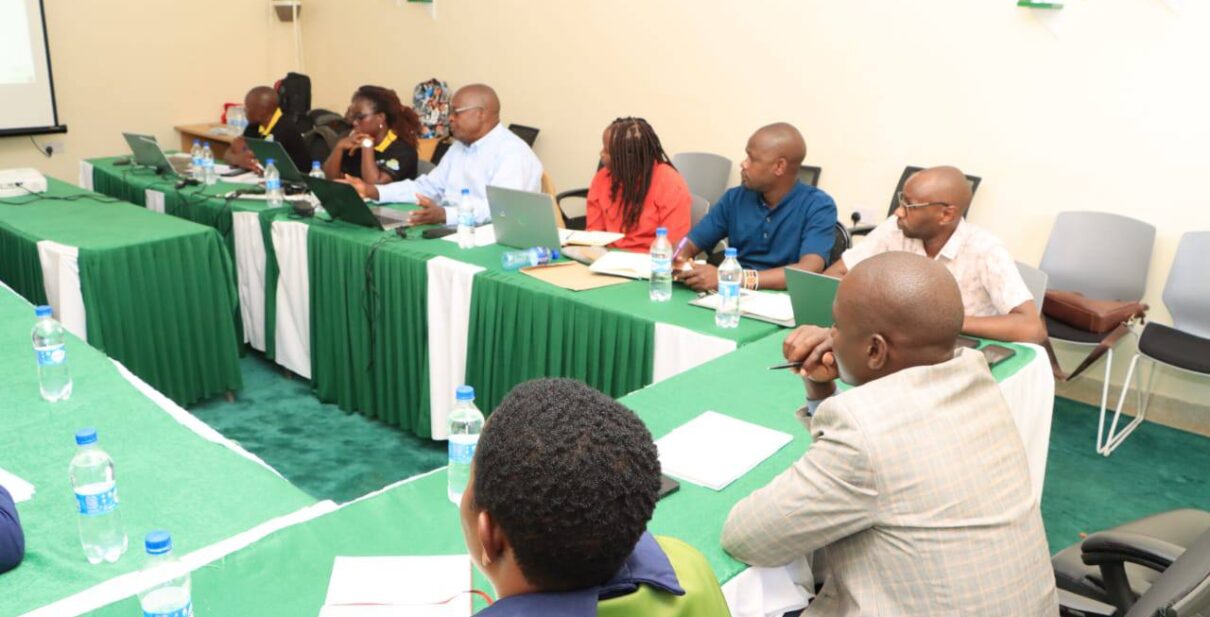
Charting a New Future: LER Consult and County Government of Nandi Lead Inclusive Informal Settlements Dialogue.
LER Consult and Nandi Partner on Informal Settlements Planning. In a powerful move toward inclusive urban development, the Ministry of Lands and Physical Planning recently held a consultative meeting with LER Consultancy to discuss strategies for informal settlements planning. The session brought together policymakers, planners, land experts, and community representatives to tackle one of the country’s most persistent urban challenges — the planning and regularization of informal settlements.
This collaborative engagement reflects a growing realization that the future of Kenyan cities and towns cannot be imagined without directly addressing the realities of their informal settlements — places often sidelined but rich in human potential, cultural identity, and community resilience.
Informal Settlements: The Unplanned Cities Within Cities.
In Kenya, over 60% of urban dwellers live in informal settlements. From Kibera to Mathare in Nairobi, and from Manyatta in Kisumu to Bangladesh in Mombasa, these areas often spring up without formal approval, basic infrastructure, or legal security of tenure. Residents face daily challenges: lack of clean water, sanitation, electricity, proper roads, and vulnerability to evictions.
Yet, they also showcase innovation, informal economies, social cohesion, and vibrant cultures. Planning for these spaces isn’t about erasure—it’s about empowerment.
LER Consultancy at the Forefront.
LER Consultancy, a leading urban and regional planning firm, is known for its people-centered planning models that integrate both physical design and socio-economic development. Their collaboration with the Ministry signals a deeper institutional commitment to structured, data-driven, and participatory approaches in dealing with informal settlements.
At the heart of the consultative meeting was a joint goal:
To shift from reactive policies to proactive planning — ensuring that residents of informal settlements are no longer “beneficiaries” of aid but stakeholders in the urban development process.
Key Themes and Takeaways from the Meeting.
1. Participatory Planning.
Both parties emphasized that residents must be at the center of planning. True transformation begins when communities are treated not as passive recipients, but as co-creators of their environments. Community mapping, digital participatory tools, and local leadership forums were discussed as ways to integrate local knowledge.
“Planning cannot be done for the people without the people.”
— LER Consultancy Representative.
2. Data-Driven Development.
LER presented a framework for settlement profiling, which includes geospatial mapping, socio-economic data collection, infrastructure audits, and land tenure analysis. This will help in prioritizing interventions, budgeting for infrastructure, and tracking progress.
3. Legal and Policy Integration.
The need for legal frameworks to support tenure regularization was underscored. Planning alone is not sufficient if it doesn’t come with secure land rights, especially for women, youth, and vulnerable groups. The team explored aligning these efforts with the National Land Policy, Vision 2030, and county urban development plans.
4. Infrastructure and Services Upgrade.
The meeting identified key areas for immediate intervention: access roads, drainage systems, waste management, water supply, and community facilities such as schools and health centers. These are the foundations of dignity and economic empowerment in informal settlements.
5. Sustainability and Resilience.
With climate change increasingly affecting urban areas, informal settlements remain some of the most at-risk zones. The meeting explored green infrastructure solutions, such as eco-toilets, solar lighting, rainwater harvesting, and climate-adapted housing models.
What This Means for Kenya’s Urban Future.
This meeting with LER Consultancy is more than just a technical session — it’s a paradigm shift. For years, informal settlements were seen as problems to be cleared. Today, the approach is different: they are places to be planned, improved, and respected.
This change is critical, especially as Kenya’s urban population is projected to double by 2050. Without sustainable planning of informal settlements, cities will continue to struggle with congestion, poverty, and inequality.
“We are planning with purpose. Every informal settlement has the right to be connected, serviced, and secure.”
— Ministry of Lands and Physical Planning.
The Road Ahead: From Vision to Action.
With strong technical support from LER Consultancy and political will from government institutions, Kenya is poised to lead the continent in inclusive urban development. The outcomes of this consultative meeting will feed into pilot projects in select counties, setting a model for national scale-up.
The next steps include:
-
Finalizing a pilot implementation plan in Nairobi and Kisumu.
-
Engaging county governments to adopt inclusive settlement planning frameworks.
-
Securing funding partnerships with development agencies and local stakeholders.
-
Rolling out a nationwide informal settlements planning and upgrading strategy.
Final Thoughts
Informal settlements are not urban failures — they are expressions of people’s will to survive and thrive, often in the absence of state support. Through deliberate, inclusive, and sustainable planning, these spaces can be transformed into thriving neighborhoods that contribute to the broader vision of a just, equitable, and livable Kenya.
The consultative meeting between the Ministry of Lands and Physical Planning and LER Consultancy marks the beginning of that transformation. It’s a journey of recognition, collaboration, and hope.
Let’s plan Kenya’s future — together, for everyone, everywhere.